
Did you hear?
I'm one of the admins on the amazing Global Glitter Tribe blog!

What does that mean?
We are a group of 13 teachers from across the globe who are dedicated to making connections and strengthening our student's understanding of being global citizens.
Every month a different member of the Glitterarti will produce a jam-packed post full of ideas for teaching global awareness- be it how we celebrate festivals from other cultures or how we address the issue of Fair Trade, you will find a host of ideas just waiting for you to read!
Now… along with a monthly blog post there will also be a monthly link-up for everyone to take part in! It's simple- save that months linky template, add your answers, pop it into your blog post and link back to the Global Glitter Tribe blog! Easy-peasy!
Look- even I managed it!

Totally inspirational
Are you trying to develop thinking skills amongst your children? Do you want them to be aware of which thinking skills are needed for a particular situation? Are you seeking to develop self-aware and independent learners?
I LOVE, like more than chocolate love, using De Bono's Thinking Hats in my classroom. The 'Hats' each have a specific thinking skill attached to them and by using them you can focus a child to apply the type of thinking needed for a specific task.
To find out more about Thinking Hats and how I use them with my 6 and 7 year olds, read this post.
Responsiveness
I appreciate that sometimes 'Hands Up' is needed but in my classroom I try to foster a more relaxed and collaborative approach to questioning where children are given time to formulate answers, not always be right or original in their thinking and develop other's ideas.
The PPPB approach works every time!
 |
| http://cheneyagilitytoolkit.blogspot.co.uk/2013/06/pose-pause-pounce-bounce.html |
Thanks go to Teacher Toolkit for bringing this notion to my attention and I will just provide a brief overview of it for you here-
Pose- a thought provoking question relevant to the topic at hand
Pause- provide thinking time (as much as you can!) and, if you feel it is necessary, partner talking time
Pounce- NO HANDS UP!!! 'Pounce' on a child for an answer
Bounce- continue 'pouncing' on children with the aim of them elaborating on the child before them's thinking
I never confirm a child's thinking- I always ask the next child 'Do you agree?'- it is so hard not to give away your opinion through facial gestures but it does work wonderfully as a method to develop collaboration and speaking and listening.
Igniting Passionate Readers
Reading is HUGE in our school! Not just the teaching of it but fostering a love for it too!
During the first half term of every school year our class becomes 'Camp Learn-a-lot'- the children bring in sleeping bags and torches and we have a 'campfire' in class.
After children have learnt how to choose a good fit book the next step is getting them to enjoy reading them.
Over the 2 weeks of 'Camp Learn-a-lot' the children snuggle in their sleeping bags around the 'campfire' or in pop-up tents and use their torches to read their books.
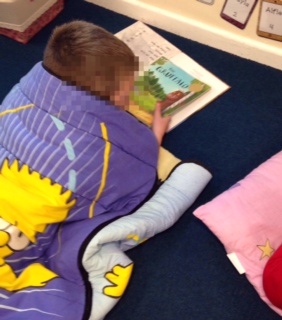

The novelty aspect of this really captures the children's interest and even if they are simply looking at the pictures I don't care- they are enjoying a book!
Bridging the Gap
If you read my 'BUILDing our confidence' post a few months ago then you will know that I have given my Numeracy lessons a bit of a shake-up.
By taking on more of a 'guided' approach 2 days a week, my children have had the opportunity to have up to an hour and 20 minutes of 'teacher face time' on top of the quality teaching they receive the other 3 days a week.
 |
| LEGO men are available from Glitter Meets Glue |
During the session we have a 10 minute introduction, two 20 minute rotations and a 5 minute plenary.
Children will take part in 2 of the following centres a day-
B- Buddy Games
U- Using Hands
I- Independent Learning
L- Linking Learning
D- Diving in Deeper
It has worked wonders for our Using & Applying skills and Problem Solving skills. BUILD allows me to really focus in on what each small group needs and provide activities which will address their needs whilst pushing them further yet with the support of an adult. The Buddy Games centre has truly inspired a love of Numeracy within my children AND provided lots of opportunities to practise those crucial basic skills.
With the new emphasis on 'Mastery' in the New National Curriculum- I can see how using BUILD will develop my more able children's 'Stage Security' too!
Enjoying Your Time
I know this seems bizarre considering I live in the drizzly north of England BUT I have loved getting home from work, making a steaming hot cuppa and sitting in my garden. Up until our recent house move, I've not had a garden to sit in so this is something of a novelty for me! Plus, unless it is my playground duty, I very rarely venture outside during the day at this time of year so the opportunity to get some fresh air and reflect on the day is priceless!
I'm sure as the weather turns then this will stop and I'll be curling up with my cuppa on the sofa but for now- this is bliss!
Fancy linking up?

Hop over to Global Glitter Tribe now and get your blog on!


